

How Often Should Medical Equipment Be Calibrated?

How often should medical equipment be calibrated? For most healthcare facilities, the answer is not simply “once a year.” Annual calibration is a common starting point, but the right interval depends on the device, its manufacturer instructions, how heavily it is used, and the clinical risk of an inaccurate reading or output.
A calibration schedule should protect patient safety without creating unnecessary downtime or service expense. The most reliable approach is to follow the equipment manufacturer’s recommended interval first, then adjust the schedule based on actual use, performance history, regulatory requirements, and the environment where the equipment operates.
Why calibration frequency matters
Calibration confirms that a device performs within its specified accuracy or output range. A blood pressure monitor with a drifting reading, an infusion pump delivering an incorrect rate, or an electrosurgical unit producing inconsistent power can affect care, workflow, and compliance.
Calibration is also different from repair and preventive maintenance. A device may power on and appear to work while still falling outside its required tolerance. Likewise, replacing a worn part does not automatically verify measurement accuracy. Preventive maintenance addresses wear, cleaning, inspection, and function checks; calibration verifies that a measurable output is correct against a known standard.
For practice managers and biomedical teams, the practical goal is simple: identify performance issues before they interrupt patient care, create repeat visits, or cause an unexpected equipment failure.
How often should medical equipment be calibrated in a clinic?
Many devices are calibrated annually, particularly equipment with measurement, timing, pressure, temperature, or energy-output functions. However, annual service is not a universal rule. Some devices need verification every six months, some only after repair or relocation, and others require testing before each use or at defined intervals set by the manufacturer.
The manufacturer’s instructions for use and service manual should be the primary authority. Those documents specify calibration methods, tolerances, and recommended frequencies for the exact model. A general calendar-based policy should never replace those requirements.
When the manufacturer does not provide a clear interval, a risk-based schedule is a practical alternative. Higher-risk devices, heavily used equipment, and equipment with a history of drift should be checked more often. Lower-use devices in stable environments may be suitable for an annual interval if their performance records support it.
Devices that commonly need scheduled calibration
Common examples include patient monitors, vital signs equipment, infusion and syringe pumps, defibrillators, anesthesia equipment, scales, thermometers, spirometers, centrifuges, electrosurgical generators, and sterilization equipment with temperature or pressure controls.
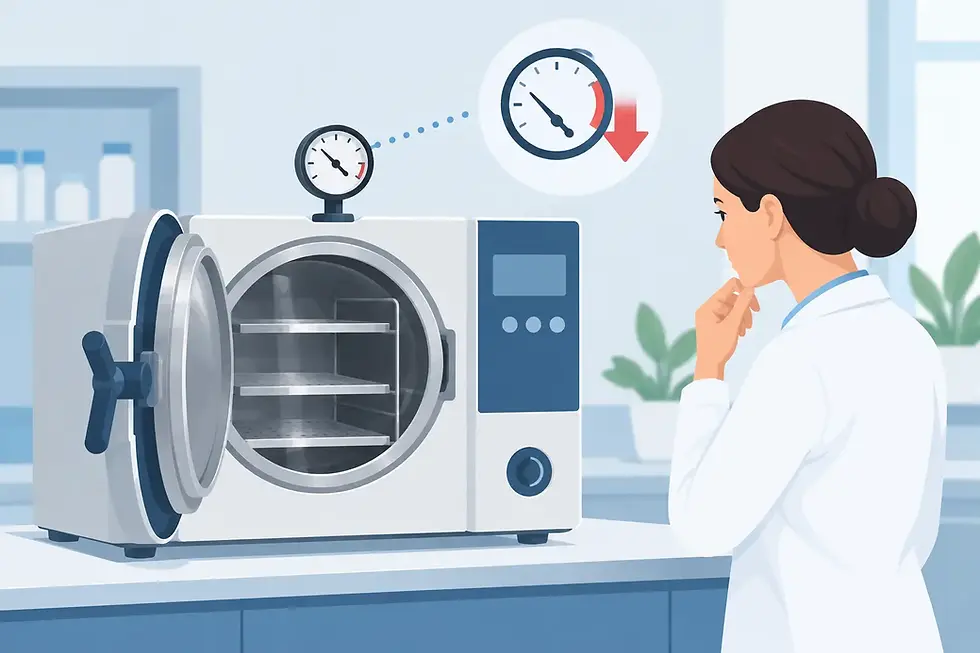
The interval varies by device. A high-volume infusion pump fleet may require regular performance verification plus annual calibration. An electrosurgical generator may require scheduled output testing, particularly after repair or when clinical staff report inconsistent cutting or coagulation performance. Autoclaves and sterilizers require a combination of preventive maintenance, mechanical inspection, and routine process monitoring. Calibration alone does not prove a sterilization cycle was effective.
For sterilizers, follow the manufacturer’s maintenance requirements and your facility’s infection-control procedures. Mechanical monitoring, chemical indicators, and biological testing each serve different purposes. A calibrated temperature or pressure reading is valuable, but it is only one part of an effective sterilization assurance program.
Four factors that determine the right interval
A useful calibration plan looks beyond the calendar. Consider these four questions when assigning an interval:
What is the clinical risk? Equipment used to make treatment decisions or deliver therapy demands tighter control than equipment used only for convenience.
How frequently is it used? A device operating all day in a busy dental office or outpatient clinic experiences more stress than one used a few times each month.
Has it drifted before? Repeated out-of-tolerance findings, repairs, or recurring error messages are reasons to shorten the interval.
What conditions does it face? Heat, moisture, vibration, dust, power fluctuations, frequent transport, and improper storage can affect performance.
For example, a portable vital signs monitor moved between exam rooms may experience drops, battery issues, and connector wear. A fixed device in a climate-controlled procedure room has a different risk profile. Both may begin with the same manufacturer recommendation, but their service records could justify different follow-up intervals.
Events that call for calibration outside the normal schedule
Waiting for the next annual service date is not always appropriate. Certain events should trigger an inspection or calibration check, even when the equipment is not yet due.
Schedule service after a repair that affects a measured value, control circuit, sensor, power output, or safety function. A device should also be checked after a significant drop, impact, fluid exposure, electrical surge, or extended storage. Relocation can matter as well, especially for sensitive equipment exposed to transportation vibration or major temperature changes.
Staff observations matter. Unusual readings, inconsistent results, alarms that do not match the patient condition, erratic output, longer cycle times, or repeated failed tests should be documented and evaluated promptly. Do not assume an issue is user error until the device has been inspected.
Equipment that fails a calibration check should be clearly removed from service until it is repaired, retested, and documented as acceptable. Continuing to use equipment known to be out of tolerance creates avoidable clinical and operational risk.
Build a calibration schedule that staff can follow
The best calibration program is one your team can manage consistently. Start with a complete equipment inventory that includes the manufacturer, model, serial number, department or room location, purchase date, service history, and next due date. Include backup devices and loaners. Equipment often gets missed when it is stored in a closet, moved between locations, or treated as a spare.
Next, assign each device an interval based on the manufacturer’s instructions and risk level. Make the schedule visible to the people who use, manage, and service the equipment. A simple asset label with the last service date and next due date can prevent confusion during a busy clinical day.
Keep service documentation with the asset record. A complete calibration record should identify the device, date of service, technician or service provider, test equipment used, measured results, accepted tolerances, corrective action taken, and next recommended service date. This history helps demonstrate control during inspections and makes recurring problems easier to spot.
It is also wise to schedule service before the due date rather than on it. Planning ahead gives your facility time to arrange a loaner, move work to another room, or schedule service during lower-volume hours. That approach is especially helpful for equipment that is central to daily patient flow.
Choosing calibration support for your equipment
Calibration quality depends on more than receiving a sticker. The service process should use appropriate test standards, document the results, and address any related safety or functional concerns. For devices that require specialized procedures, manufacturer-trained or qualified technical support can help protect both equipment performance and warranty considerations.
A full-service provider can also reduce coordination work by combining calibration with preventive maintenance, repairs, replacement parts, and post-repair testing. IMEDTECH supports clinics and practices that need practical, responsive service for equipment that cannot stay out of operation for long.
Before scheduling, confirm what the service includes. Ask whether the provider performs an actual calibration, a functional check, or both; whether out-of-tolerance results are documented; and whether repair approval is needed before additional work begins. Clear expectations prevent surprises and help control costs.
Do not let a due date become a disruption
A well-managed calibration program is less about treating every device the same and more about knowing which equipment carries the greatest risk when it drifts. Start with manufacturer requirements, track the real condition and use of each asset, and act quickly after repairs or performance concerns. A scheduled service visit is far easier to manage than a device failure in the middle of a patient day.


Comments