
Why Does an Autoclave Leak Steam? Causes and Fixes

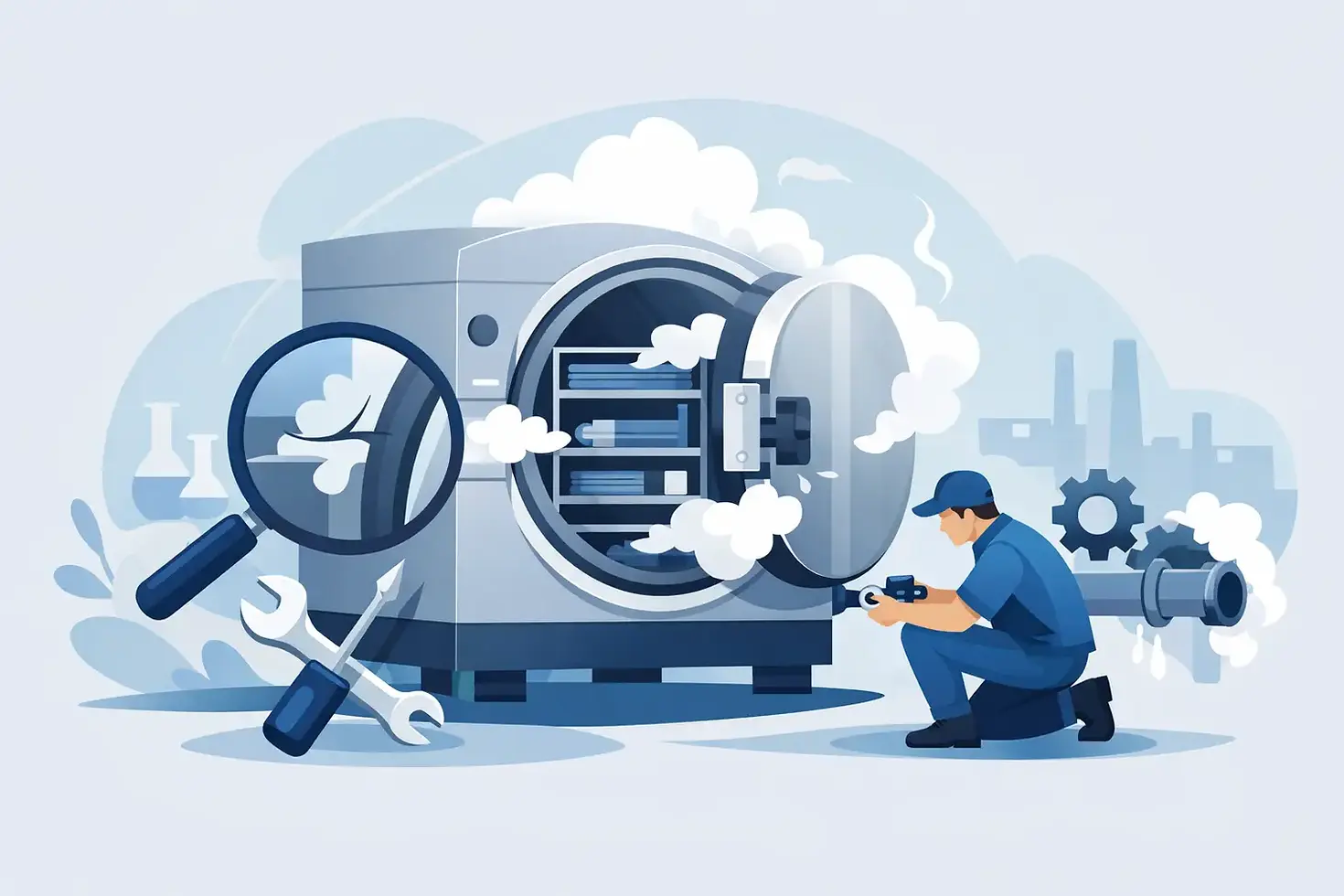
A visible plume at an autoclave door is not a cosmetic issue. When staff ask, “why does autoclave leak steam?” the answer may range from a normal part of the cycle to a worn door gasket, a misaligned chamber door, or a pressure-control concern that needs prompt service. The distinction matters because steam escaping at the wrong time can affect staff safety, cycle performance, and the confidence your practice has in its sterilization process.
Do not attempt to force a door open, tighten pressurized fittings, or place hands near an active steam leak. Allow the unit to complete its cycle or follow the manufacturer’s shutdown procedure, let pressure return to zero, and allow the chamber to cool before inspection. If the leak is substantial, occurs while the chamber is pressurized, or is accompanied by an error code, remove the autoclave from service until it can be evaluated.
When an Autoclave Steam Leak May Be Normal
Not every release of vapor indicates equipment failure. Most tabletop steam sterilizers vent steam during portions of the cycle, particularly during depressurization, exhaust, and drying. The amount, timing, and location of the vapor are the useful clues.
A controlled release from the designated exhaust port near the end of a cycle is generally expected. The same is true of some visible vapor when a hot chamber is opened after a completed cycle. Steam can condense quickly in a cool sterilization area, making a normal discharge look more dramatic than it is.
Steam escaping from around the door perimeter while the chamber is building or holding pressure is different. So is a continuous leak from a valve, fitting, or drain area. Those conditions can prevent the sterilizer from reaching or maintaining the pressure and temperature required for its programmed cycle.
Why Does an Autoclave Leak Steam Around the Door?
The door seal is the most common source of an autoclave steam leak. On many Midmark and Ritter-style tabletop sterilizers, the gasket must create an even seal around the full circumference of the chamber opening. A small defect can become obvious only after heat and pressure rise.
Worn, damaged, or contaminated door gasket
Door gaskets are consumable components. Repeated heating, cooling, compression, and chemical exposure eventually make rubber less flexible. Cracks, flattening, tears, hardened sections, or a shiny compressed area can keep the gasket from sealing correctly.
Residue is another frequent issue. Packaging debris, instrument lubricant, mineral deposits, tape adhesive, or lint on the gasket or chamber sealing surface can create a path for steam to escape. After the unit is cool and depressurized, inspect the gasket and mating surface carefully. Clean only according to the manufacturer’s instructions, using approved materials and avoiding sharp tools that can cut the seal.
Replacement is usually the practical solution when the gasket is visibly damaged, no longer pliable, or continues to leak after proper cleaning and seating. Using the correct gasket for the specific model is essential. Similar-looking seals may differ in size, profile, and heat tolerance.
Door not fully closed or correctly adjusted
A door latch that does not fully engage may allow the gasket to seal unevenly. Staff may notice resistance when closing the door, an unusual latch feel, or steam appearing on one side of the door rather than evenly around the seal.
Door alignment can shift over time because of hinge wear, latch wear, or repeated closing force. The corrective action depends on the model. Some units have serviceable adjustment points, but a door that requires excessive force or repeated adjustment should be inspected by a qualified technician. Over-adjusting a latch can damage the gasket, strain the door mechanism, or create a different sealing problem.
Chamber rim damage or buildup
The chamber rim must be smooth and clean for the gasket to do its job. Nicks, corrosion, accumulated scale, or residue on this surface can compromise the seal. Water quality is often part of the larger story. Mineral-heavy water can leave deposits that affect components throughout the autoclave, not just at the door.
Follow the sterilizer manufacturer’s water requirements and maintenance schedule. If scale is visible or the practice has recurring residue-related issues, evaluate the water source and the condition of filters or treatment equipment as part of the service plan.
Leaks From Valves, Tubing, or the Exhaust Area
Steam may also appear beneath the unit, near the rear panel, or around an exhaust connection. These leaks require a more cautious response because they can involve pressurized components and may not be visible until a particular stage of the cycle.
A valve may fail to seat because of wear, debris, mineral buildup, or an internal mechanical fault. Tubing and fittings can degrade from age, vibration, heat cycles, or improper prior repairs. A leaking safety valve is especially important to address. That component protects the unit from unsafe overpressure conditions and should be inspected or replaced only by trained personnel using approved parts.
A drain line should not be mistaken for a steam leak. Depending on the model and installation, hot condensate may discharge during operation. However, continuous vapor, sputtering water, unusual noise, or moisture accumulating where it has not previously appeared can indicate a drain restriction, improper line routing, or a component issue. Compare the observation with the manufacturer’s operating guidance rather than assuming any rear or bottom discharge is normal.
How Steam Leaks Affect Sterilization Results
A leak does not automatically mean every load is nonsterile, but it does create a process concern that should not be ignored. Steam sterilization relies on the correct relationship between time, temperature, pressure, and air removal. If the chamber cannot reach or hold operating conditions, the cycle may abort, display an error, run longer than expected, or complete without delivering consistent results.
Do not release processed instruments for patient use if the cycle parameters, mechanical readouts, chemical indicators, or biological monitoring results are unacceptable. Follow your facility policy, the sterilizer manufacturer’s instructions for use, and applicable infection-control requirements. Reprocess the load only after the cause of the problem has been corrected and the unit has completed a successful cycle.
The trade-off is simple: continuing to use a leaking autoclave may seem faster than scheduling service, but an unplanned failure, failed monitoring result, or instrument reprocessing backlog is usually more disruptive. Addressing a minor gasket issue early is generally less costly than waiting for damage to affect additional components.
Safe Checks Your Team Can Perform
Once the sterilizer is cool, powered down as directed, and fully depressurized, office staff can document a few useful details before calling for service. Note the exact location of the leak, the cycle phase when it occurs, whether an error code appears, and whether the unit reaches its expected pressure and temperature. A brief description such as “steam escapes from the upper-right door edge during pressurization” is more useful than “unit is leaking.”
Inspect the door gasket and chamber rim for visible debris or damage, and confirm that the door closes normally. Review water quality practices, recent maintenance, and any changes in cycle times or sounds. If the autoclave has a maintenance counter or recommended service interval, check whether scheduled preventive maintenance is overdue.
Avoid using unapproved lubricants, sealants, tape, or aftermarket parts of uncertain compatibility. A temporary patch on a gasket can introduce contamination concerns and may worsen the sealing problem under heat and pressure. Likewise, do not disassemble valves, safety devices, or internal panels unless the work is being performed by qualified service personnel.
When to Schedule Autoclave Repair
Schedule service promptly when steam leaks from the door during pressurization or exposure, leaks from internal or external fittings, repeats after gasket cleaning, or appears with failed cycles and error codes. Immediate evaluation is warranted if the unit cannot build pressure, vents continuously, emits unusual odors, or shows signs of electrical or water damage.
A qualified technician can inspect the gasket, door alignment, latch condition, chamber rim, valves, tubing, heating system, and pressure controls. They can also verify operation after repair and help identify preventive maintenance needs before another unexpected shutdown affects the practice. For clinics managing multiple devices or older equipment, keeping common wear parts and a defined service schedule can reduce avoidable downtime.
IMEDTECH supports healthcare facilities with practical autoclave parts, preventive maintenance resources, and certified repair service for equipment that cannot afford to be unreliable. A steam leak is often repairable, but the safest next step is to identify where it occurs, protect the load from questionable processing, and return the sterilizer to service only after its performance is confirmed.


Comments