

Electrical Safety Testing for Clinical Equipment

A damaged power cord on an exam table or electrosurgical unit can look like a minor maintenance issue until it creates an avoidable shock risk, equipment failure, or canceled procedure. Electrical safety testing gives healthcare facilities a practical way to find those problems before they affect staff, patients, and daily operations.
For medical practices, dental offices, and outpatient clinics, this work is not simply about checking whether a device powers on. A unit can appear to operate normally while a grounding fault, elevated leakage current, loose connection, or compromised enclosure creates a safety concern. Consistent testing supports safer care, clearer maintenance records, and fewer surprises when equipment is needed most.
What electrical safety testing evaluates
Electrical safety testing uses a calibrated analyzer and visual inspection to assess how a medical device handles electrical power under specified test conditions. The exact procedure depends on the equipment type, manufacturer instructions, facility policy, and applicable requirements. In a clinical environment, testing commonly addresses grounding integrity, leakage current, polarity, insulation-related concerns, and accessible conductive parts.
Ground continuity testing verifies that the protective ground path is intact where the device design requires one. If a grounded piece of equipment develops a poor connection between its power cord, chassis, and internal grounding points, a fault could place voltage on exposed metal surfaces. This is especially relevant for equipment that is moved frequently, cleaned aggressively, or operated near fluids.
Leakage current testing measures small amounts of unintended electrical current that may flow through a device or its accessible parts. Some leakage is expected within defined limits, but acceptable levels are determined by the relevant test method and equipment classification. A test result should never be judged in isolation. The device’s intended use, power configuration, accessories, and manufacturer specifications all matter.
A thorough inspection also looks for issues an analyzer cannot explain on its own: cracked housings, missing ground pins, worn strain relief, damaged receptacles, liquid exposure, loose footswitch connectors, and improvised adapters. A failed visual inspection can be reason enough to remove equipment from service before formal electrical measurements are completed.
Why clinical equipment needs more than a power-on check
Healthcare equipment is exposed to conditions that accelerate wear. Cords are bent around carts, plugs are pulled from wall outlets by the cable, surfaces are disinfected repeatedly, and devices may be transported between treatment rooms. In dental and outpatient settings, equipment can also be affected by moisture, suction systems, and busy turnaround schedules.
Electrosurgical equipment deserves particular attention because it combines electrical energy delivery, patient-applied accessories, footswitches, and generator connections. Electrical safety testing does not replace the functional performance checks required for an electrosurgical unit, but it is an essential part of a broader inspection process. A generator may pass an electrical safety test while still requiring verification of output, alarms, accessories, and intended clinical function.
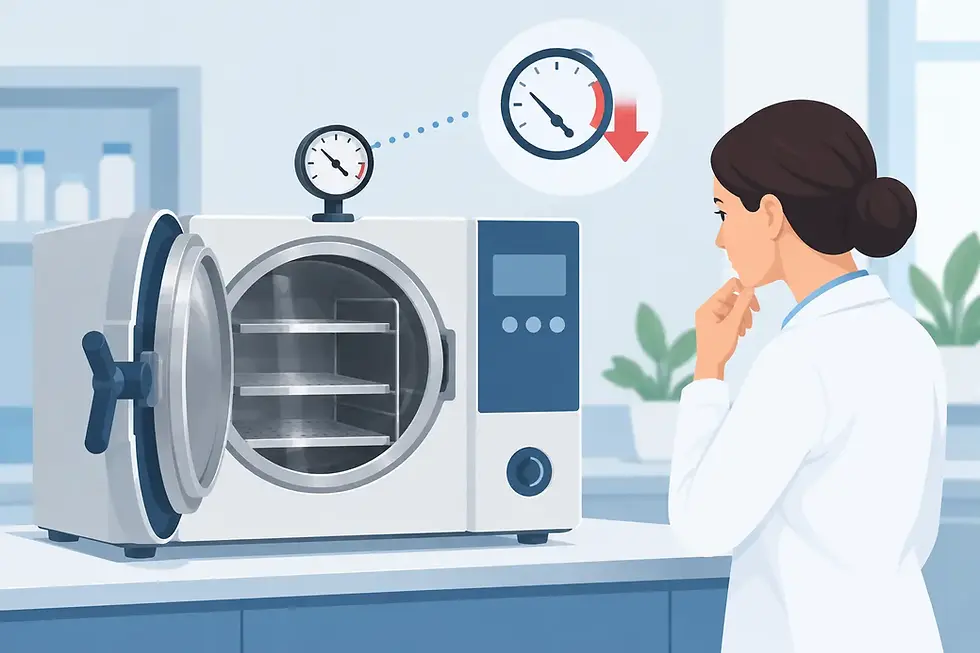
Sterilization equipment presents a similar distinction. An autoclave or steam sterilizer may need electrical inspection and testing of its power supply components, cord, plug, and accessible conductive surfaces where applicable. However, passing those tests does not validate sterilization efficacy. Chamber performance, temperature, pressure, cycle parameters, biological monitoring, and preventive maintenance remain separate responsibilities.
This distinction matters because a “pass” label should not create false confidence. Electrical safety is one part of equipment readiness, alongside calibration, functional verification, preventive maintenance, cleaning, and documentation.
When should a facility schedule testing?
There is no single interval that fits every device in every practice. A risk-based program is more useful than treating all equipment the same. Manufacturer recommendations, accreditation expectations, facility policy, device criticality, age, repair history, and frequency of use should shape the schedule.
Many facilities test equipment during incoming inspection, after repairs that affect electrical components, after a significant drop or fluid incident, and at planned preventive maintenance intervals. Portable equipment often deserves closer attention than permanently installed equipment because cords, plugs, and housings experience more handling. Older devices may also warrant more frequent inspection when parts are worn or past issues have been documented.
Testing after repair is particularly important. Replacing a power cord, internal power supply, chassis-mounted component, outlet, or grounding connection can change the device’s electrical safety profile. The repair should be followed by the appropriate test procedure and documented before the equipment returns to patient care.
If a device trips breakers, produces a tingling sensation, has a warm plug, shows intermittent power loss, smells of overheating, or has visible cord damage, remove it from service promptly. Do not wait for the next scheduled maintenance visit. These symptoms can indicate a serious electrical issue, and continued use can increase both safety and repair costs.
A practical testing workflow for clinics
A dependable program starts with a complete equipment inventory. Each asset should have an identifier, location, manufacturer, model, serial number, service history, and planned maintenance date. Without a reliable inventory, testing becomes reactive and records become difficult to defend during inspections or internal reviews.
Before connecting an analyzer, the technician should confirm the device identity, review prior service notes, and complete a visual inspection. The proper analyzer setup and test selection must match the equipment’s electrical classification and manufacturer guidance. Using an incorrect procedure can produce misleading results or place the device at risk.
A complete service record should capture more than a simple pass or fail. Useful documentation includes:
Asset identification, manufacturer, model, and serial number
Test date, technician, analyzer identification, and analyzer calibration status
Visual inspection findings and the electrical tests performed
Measured results, applicable limits, corrective action, and final disposition
Records should be easy to retrieve. If a device fails, document whether it was removed from service, repaired, retested, or replaced. A label on the device can help staff identify its current status, but the detailed service record is what supports traceability over time.
What to do when equipment fails
A failed result is not always a reason to discard a device, but it is a reason to stop and assess it. The right response depends on the failure mode, device age, repair availability, cost of downtime, and clinical importance of the equipment.
Some failures are straightforward. A damaged detachable power cord, worn plug, or defective strain relief may be corrected quickly with the right replacement part and follow-up testing. Other failures point to internal power supply, grounding, insulation, or board-level problems that require qualified diagnosis. Attempting a quick fix without proper parts, service information, and retesting can create a larger safety issue.
Cost matters, but total cost matters more. A lower repair invoice is not necessarily the better decision if the device has repeated failures, unsupported components, long repair lead times, or a history of interrupting patient schedules. Conversely, replacing a serviceable unit too early can be unnecessary when qualified repair and preventive maintenance can extend its useful life.
For equipment that is central to daily procedures, clinics should also plan for downtime. A loaner, backup unit, or scheduled service window may be more economical than waiting for an urgent breakdown. This is especially true for sterilizers, electrosurgical generators, and other equipment that can delay multiple appointments when unavailable.
Keep testing connected to preventive maintenance
Electrical safety testing works best when it is part of a planned maintenance program rather than a stand-alone event. During the same service visit, a qualified technician may inspect wear items, verify basic function, address manufacturer-recommended maintenance tasks, and identify components approaching failure. That approach reduces repeat service calls and gives facility managers a clearer picture of equipment condition.
Calibration may be part of the same overall equipment management strategy, but it serves a different purpose. Calibration confirms that measured performance is accurate within an intended range. Electrical safety testing assesses electrical hazards and protective measures. Some devices need both; some need one more frequently than the other. The correct plan depends on the device and how it is used.
For clinics managing multiple brands and device types, a centralized service partner can simplify scheduling, repair coordination, replacement-part sourcing, and documentation. IMEDTECH supports healthcare providers with practical equipment service solutions designed to keep essential clinical equipment available, maintained, and ready for use.
The most effective safety program is the one your staff can maintain consistently. Start with the equipment that sees the most use, has the greatest patient impact, or shows the most wear. A documented inspection today can prevent a canceled procedure, an unexpected repair, and a safety concern tomorrow.


Comments