

Biomedical Repair Versus Replacement: What Pays?

A failed autoclave before a full schedule, an electrosurgical unit with inconsistent output, or a monitor that cannot pass verification creates the same immediate question: can this be repaired quickly, or does it need to be replaced? Biomedical repair versus replacement is not simply a purchasing decision. It affects patient flow, staff productivity, compliance obligations, and the total cost of keeping a practice operational.
For most facilities, the right answer depends on the equipment's condition, service history, parts availability, safety requirements, and the real cost of downtime. A lower-priced replacement is not always the better value, just as repairing an aging device is not always the responsible choice. A disciplined evaluation helps facilities protect both their budget and their clinical operations.
Biomedical Repair Versus Replacement: Start With the Failure
The first step is identifying what actually failed. A device that appears to be at the end of its life may have a repairable issue, such as a worn door gasket, failed heating element, damaged power supply, faulty switch, sensor problem, or overdue calibration. In sterilization equipment, for example, routine components can wear out long before the chamber or core operating system reaches the end of its useful life.
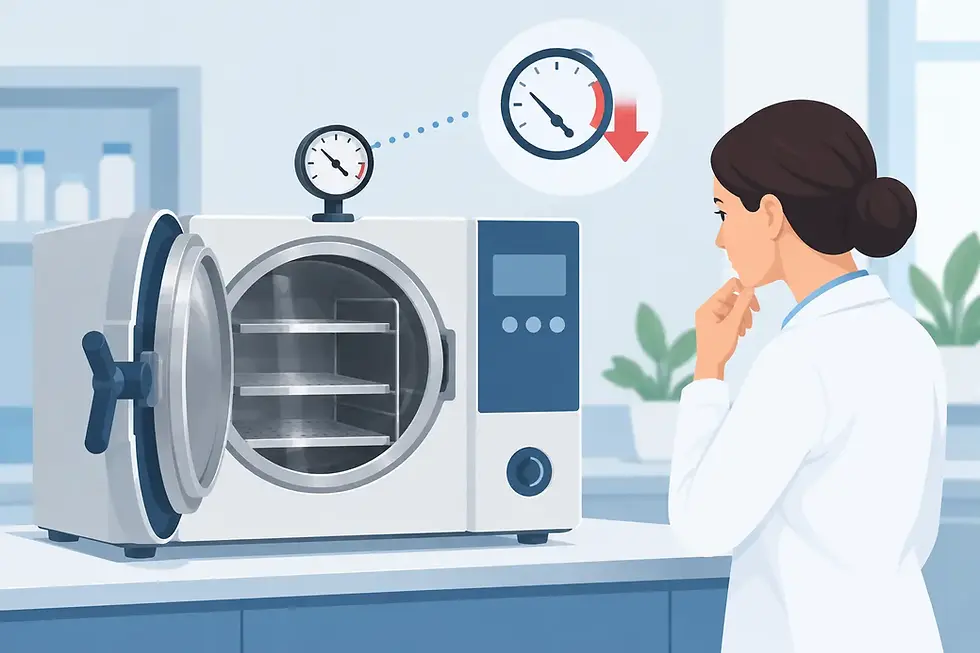
A qualified technician should determine whether the failure is isolated or part of a larger pattern. One repairable component is very different from repeated failures across multiple systems. If an autoclave has a single worn valve but otherwise produces consistent cycle results, repairing it can be a practical way to restore service quickly. If it has recurring temperature, pressure, door seal, and control-board issues, replacement deserves more serious consideration.
Documentation matters here. Service records reveal whether the current problem is unusual or whether it follows a pattern of rising repair frequency. They also help a facility distinguish between normal wear and a device that is becoming unreliable.
When Repair Is the Better Operational Choice
Repair often makes sense when the equipment is still clinically suitable, the problem has a defined cause, and replacement parts remain available. This is especially true for equipment with durable core assemblies and serviceable components. Proper repairs, calibration, and preventive maintenance can extend useful life while avoiding the capital expense and disruption of purchasing new equipment.
Repair is generally the stronger option when the device has a good maintenance history, meets current clinical needs, and can be returned to service within an acceptable timeframe. It may also be the better choice when staff are familiar with the device, existing accessories remain compatible, and a replacement would require changes to workflow or operator training.
Cost should be evaluated beyond the initial repair quote. A repair that restores dependable operation for several years can deliver a strong return. It also keeps usable equipment out of the waste stream and allows a practice to reserve capital for upgrades with a clearer clinical or operational benefit.
For many outpatient clinics and dental practices, fast access to certified service and quality replacement parts changes the equation. A repair is only valuable if it is completed correctly, documented appropriately, and supported by a realistic assessment of the device's remaining life.
Repairs Need a Clear Scope
Not every repair should be approved automatically. Ask the service provider what caused the failure, which components will be replaced, whether calibration or performance testing is included, and what conditions could affect future reliability. A clear repair scope prevents a facility from approving a short-term fix without understanding the larger equipment condition.
For safety-critical devices, repairs should restore the equipment to the manufacturer's operating specifications or applicable performance requirements. If a device cannot be verified after service, it should not return to patient-care use simply because it powers on.
When Replacement Is the Responsible Decision
Replacement becomes more compelling when reliability, safety, compliance, or supportability is at risk. Equipment that fails repeatedly can consume far more than its repair invoices. It can delay appointments, create sterilization bottlenecks, require staff workarounds, and put pressure on teams already managing a full patient schedule.
An older device may also reach a point where critical parts are discontinued, proprietary components are difficult to source, or manufacturer support is no longer available. In these cases, a repair may be technically possible but operationally risky. If a single unavailable part could take the device out of service for weeks, the facility should consider whether it has an appropriate backup plan.
Replacement may also be appropriate when a newer unit offers meaningful advantages: better cycle capacity, improved reliability, current safety features, easier documentation, lower energy use, or compatibility with the practice's current workflow. The key is to separate useful improvement from unnecessary feature spending. A replacement should solve a real operational problem, not just provide a newer version of what the facility already has.
The Hidden Costs of Waiting Too Long
Delayed replacement can look economical until the next failure occurs at the worst possible time. Emergency service, expedited shipping, temporary equipment arrangements, cancelled procedures, and staff overtime can quickly exceed the cost difference between a planned purchase and a crisis purchase.
Facilities should also consider the age and availability of backup equipment. If a practice has only one sterilizer or one essential treatment device, its tolerance for repeated failure is much lower. In a single-point-of-failure situation, replacement planning may be necessary even while the current device remains repairable.
Compare Total Cost, Not Just the Quote
A useful decision compares the cost of repair with the expected cost of ownership over the next several years. The repair quote is one part of that calculation, but it is not the entire calculation. Consider expected service needs, parts availability, calibration requirements, downtime exposure, equipment performance, and whether the unit will continue meeting the practice's needs.
For example, a $900 repair on a reliable device may be a sound decision when replacement would cost several thousand dollars and require no meaningful operational improvement. That same $900 repair may be difficult to justify if the device has required several costly visits in the past year, lacks dependable parts support, and is likely to fail again during a busy clinical period.
A facility does not need perfect forecasts to make a better decision. It needs a consistent process. Track repairs by device, note failures that affect patient scheduling, and review whether maintenance is preventing predictable issues. This information turns future purchasing conversations from guesswork into planning.
Compliance and Calibration Cannot Be Afterthoughts
Repair and replacement decisions must account for the equipment's role in patient safety and regulatory readiness. Sterilization equipment must achieve and document appropriate cycle performance. Devices that measure, monitor, or deliver energy may require calibration, functional verification, or safety testing after service. A device that appears functional but cannot demonstrate reliable performance can create a larger problem than an obvious failure.
Preventive maintenance helps facilities avoid this choice becoming an emergency. Scheduled inspections, replacement of wear items, calibration, and performance checks can identify issues before they interrupt care. They also create a service record that supports informed decisions when equipment eventually approaches retirement.
IMEDTECH helps practices assess equipment issues with a practical focus on repairability, parts access, calibration needs, and fast return to service. That support is especially useful when a facility needs to balance an immediate operational problem with a longer-term equipment plan.
Build a Decision Process Before the Next Breakdown
The best time to decide how your facility handles aging equipment is before a critical device fails. Establish service thresholds for frequently used equipment, maintain records of repairs and preventive maintenance, and identify which devices require backup capacity. For older units, ask early about replacement-part availability and realistic repair turnaround times.
It is also wise to plan capital purchases around equipment condition rather than calendar pressure alone. A device may be worth maintaining for years, while another should be replaced before it becomes a source of repeated disruption. There is no universal age at which equipment must be retired. Usage level, care history, support status, and clinical role all matter more than age by itself.
The most reliable choice is the one that keeps patients moving, staff confident, and equipment performing as required. Whether that means a targeted repair or a planned replacement, acting with complete service information gives your facility more control than reacting to the next unexpected shutdown.


Comments