
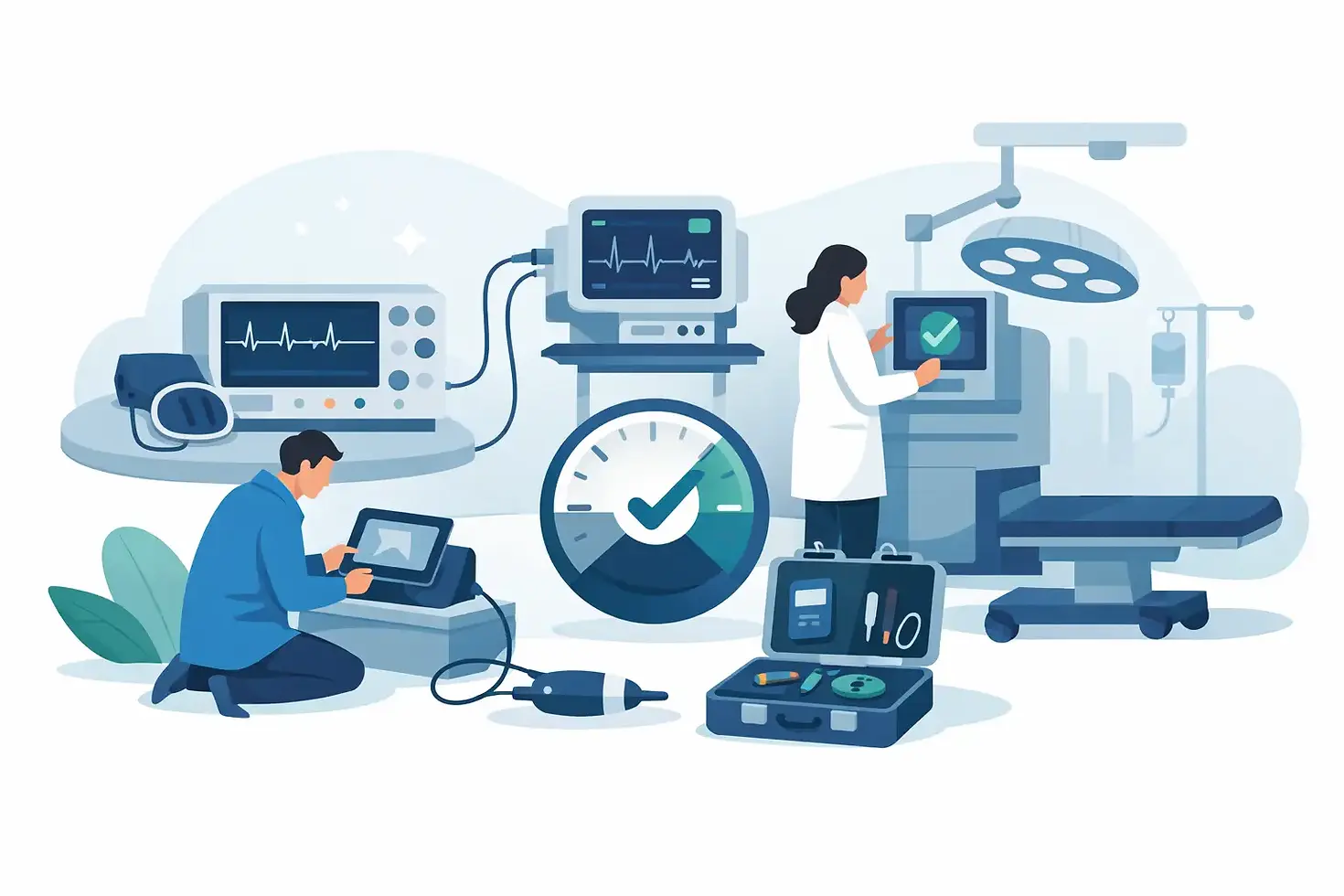
Medical Equipment Calibration Services That Keep You Ready

A questionable reading, a failed indicator test, or a sterilizer that cannot be verified can stop a full clinical schedule. Medical equipment calibration services give practices a planned way to confirm that critical devices are measuring, displaying, and performing within expected tolerances before a small issue becomes patient-care risk or costly downtime.
For office managers, biomedical teams, and practice owners, calibration is not simply another service line to schedule. It is part of maintaining reliable operations. The right service program connects calibration records, preventive maintenance, repairs, replacement parts, and responsive technical support so equipment stays ready for the work it supports.
What Medical Equipment Calibration Services Actually Do
Calibration compares a device's performance against a known, traceable reference standard. A qualified technician checks whether the device's reading or output falls within the manufacturer's specified tolerance. If it does not, the equipment may require adjustment, repair, further testing, or removal from service.
The exact process depends on the equipment. A temperature-monitoring device may be tested at multiple points across its operating range. A pressure instrument may be compared against a calibrated reference gauge. Electrosurgical equipment may need output verification using specialized analyzers. For sterilization equipment, technicians may inspect and test performance-related components, while the facility follows the appropriate procedures for cycle monitoring and documentation.
A calibration certificate or service report should clearly identify the device, date of service, test results, reference equipment used, tolerance criteria, and final status. That documentation gives your team a record to review during internal quality checks, accreditation preparation, or equipment troubleshooting.
Calibration does not automatically mean a device was repaired, cleaned, or fully maintained. Those services often work together, but they serve different purposes. A device can pass calibration and still need preventive maintenance because a worn seal, aging battery, damaged cable, or contaminated component may affect reliability later.
Why Calibration Protects More Than a Number
A device can appear to be working while gradually drifting outside an acceptable range. That drift may be caused by regular use, heat exposure, vibration, aging components, power issues, physical impact, or prior repairs. In a busy practice, those changes are easy to miss because the equipment still powers on and produces a result.
The operational impact varies by device and clinical application. An inaccurate monitor can affect clinical decisions. A poorly performing electrosurgical unit can create inconsistent results at the point of care. Unverified equipment can also complicate quality reviews, delay procedures, and leave staff unsure whether a result can be trusted.
Regular calibration creates a baseline. When a unit begins to trend out of tolerance, your service provider can identify the problem earlier and recommend the practical next step. Sometimes that means a minor adjustment or replacement part. Other times, repair or replacement is the better financial decision. The value is having reliable information before the device fails during a patient appointment.
Calibration, Preventive Maintenance, and Repair: Know the Difference
These terms are often grouped together, but treating them as the same service can create gaps in an equipment plan.
Calibration verifies accuracy or output against a defined standard. Preventive maintenance focuses on keeping the device in dependable operating condition through inspection, cleaning, testing, lubrication where applicable, and replacement of wear items. Repair addresses a confirmed fault, such as an error code, damaged component, failed board, leaking valve, or inconsistent performance.
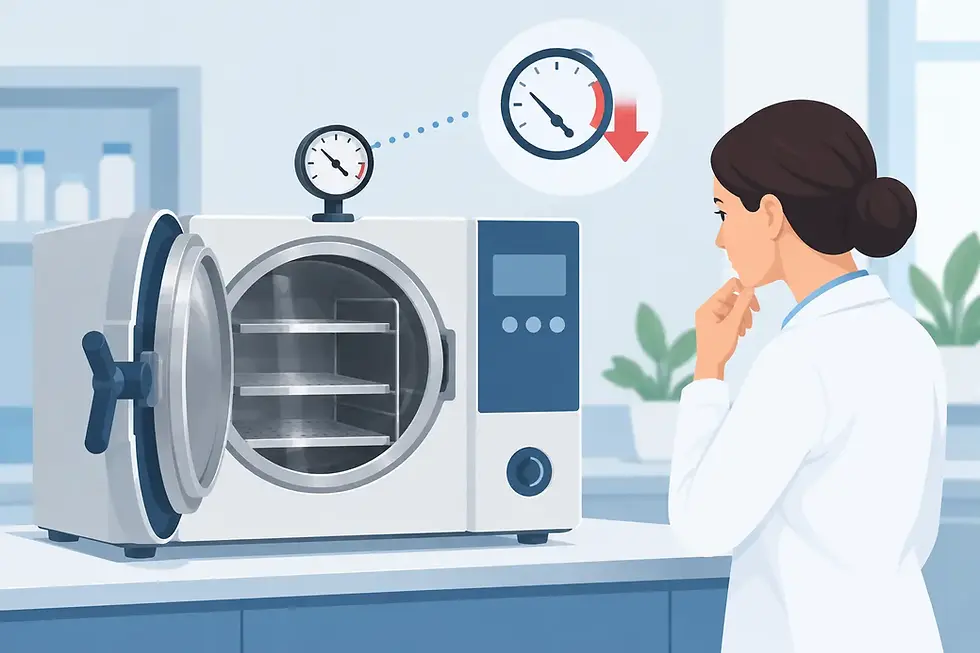
A well-managed service visit may include all three, but only when appropriate. For example, an autoclave service appointment may involve inspection of door seals and valves, replacement of worn maintenance items, functional testing, and performance checks. If testing identifies a failed component, repair may be required before the unit can return to service.
Ask your provider what is included before scheduling. A low-cost calibration quote may cover only measurement verification, while a more complete visit may include preventive maintenance tasks, documentation, and a recommendation for any repair needed. The best choice depends on the device's condition, service history, manufacturer requirements, and how much downtime your facility can absorb.
Which Equipment Needs a Calibration Plan?
Not every item in a facility follows the same interval or testing method. The manufacturer’s instructions for use, your clinical policies, the device’s risk level, usage volume, and applicable accreditation or state requirements should guide the schedule.
Common categories that may require routine calibration, verification, or performance testing include patient monitoring equipment, vital signs devices, infusion and syringe pumps, defibrillators, electrosurgical units, diagnostic instruments, laboratory equipment, scales, temperature devices, and pressure-related instruments. Sterilization equipment also requires disciplined maintenance, monitoring, and documentation to support safe, consistent processing.
High-use equipment deserves particular attention. A device used dozens of times per day experiences more wear than the same model used occasionally. The same is true for equipment exposed to high temperatures, moisture, repeated transport, or frequent cleaning. A standard annual interval may be appropriate for some assets, while others need more frequent checks based on use and manufacturer guidance.
Build a Schedule That Works With Your Clinic
The most effective calibration program is one your staff can actually maintain. Start with a current equipment inventory. Record each device’s manufacturer, model, serial number, location, purchase date, service history, and recommended calibration or maintenance interval. Include backup units and older equipment that may have been moved between rooms or departments.
Next, prioritize equipment based on clinical role and downtime consequences. A device that directly affects treatment decisions or shuts down a key workflow when unavailable should not be managed only after a failure occurs. Schedule service before the due date, especially for equipment that requires removal from use, extended testing, or parts ordering.
Many practices benefit from grouping service by department, device type, or location. That can reduce disruptions and help your team prepare equipment for the technician. However, grouping everything into one annual date is not always ideal. If several high-priority devices come due at the same time, the practice could lose too much capacity during service. Staggering critical assets may be the smarter approach.
Keep records in a format staff can access quickly. A simple asset list with due dates may be enough for a small office. Larger facilities may need a computerized maintenance management system or more detailed tracking. What matters is that staff can see what is due, what was completed, what failed, and what follow-up is still required.
What to Expect From a Qualified Service Partner
Fast turnaround matters, but speed should not come at the expense of clear testing and usable documentation. Look for a provider that can explain the scope of service, identify whether calibration standards are traceable, and provide reports that match your equipment records.
Technical capability also matters. Service partners should understand the equipment categories they support and recognize when a reading points to a deeper mechanical or electrical issue. A technician who can coordinate calibration with preventive maintenance, repairs, and replacement parts can save your office from contacting multiple vendors when a device needs more than a certificate.
Before service, confirm the equipment model, serial number, location, reported issue, and service history. Let the provider know whether the unit is producing inconsistent readings, displaying errors, or has recently been repaired. That context can prevent repeat visits and helps the technician determine whether calibration alone is appropriate.
After service, review the results rather than filing the report without inspection. If a device was adjusted, repaired, or found out of tolerance, make sure your team understands the final disposition. Confirm whether it is cleared for use, whether additional monitoring is needed, and when the next service is due.
Reduce Downtime Before It Starts
Calibration works best when it is part of a broader equipment readiness plan. Maintain backup devices for high-demand clinical functions when feasible. Keep commonly needed preventive maintenance kits and replacement parts available for equipment with predictable wear items. Train staff to report performance changes early instead of waiting until a device fails completely.
For practices managing sterilizers, electrosurgical devices, and other equipment that supports daily procedures, one missed service date can affect far more than a single appointment. Working with a full-service partner such as IMEDTECH can simplify coordination between calibration, maintenance, repair, and parts support when a device needs attention.
The practical goal is not to service equipment more often than necessary. It is to service it with enough consistency and documentation that your staff can rely on what the device tells them, patients receive uninterrupted care, and your practice is not forced into an avoidable last-minute repair.


Comments