
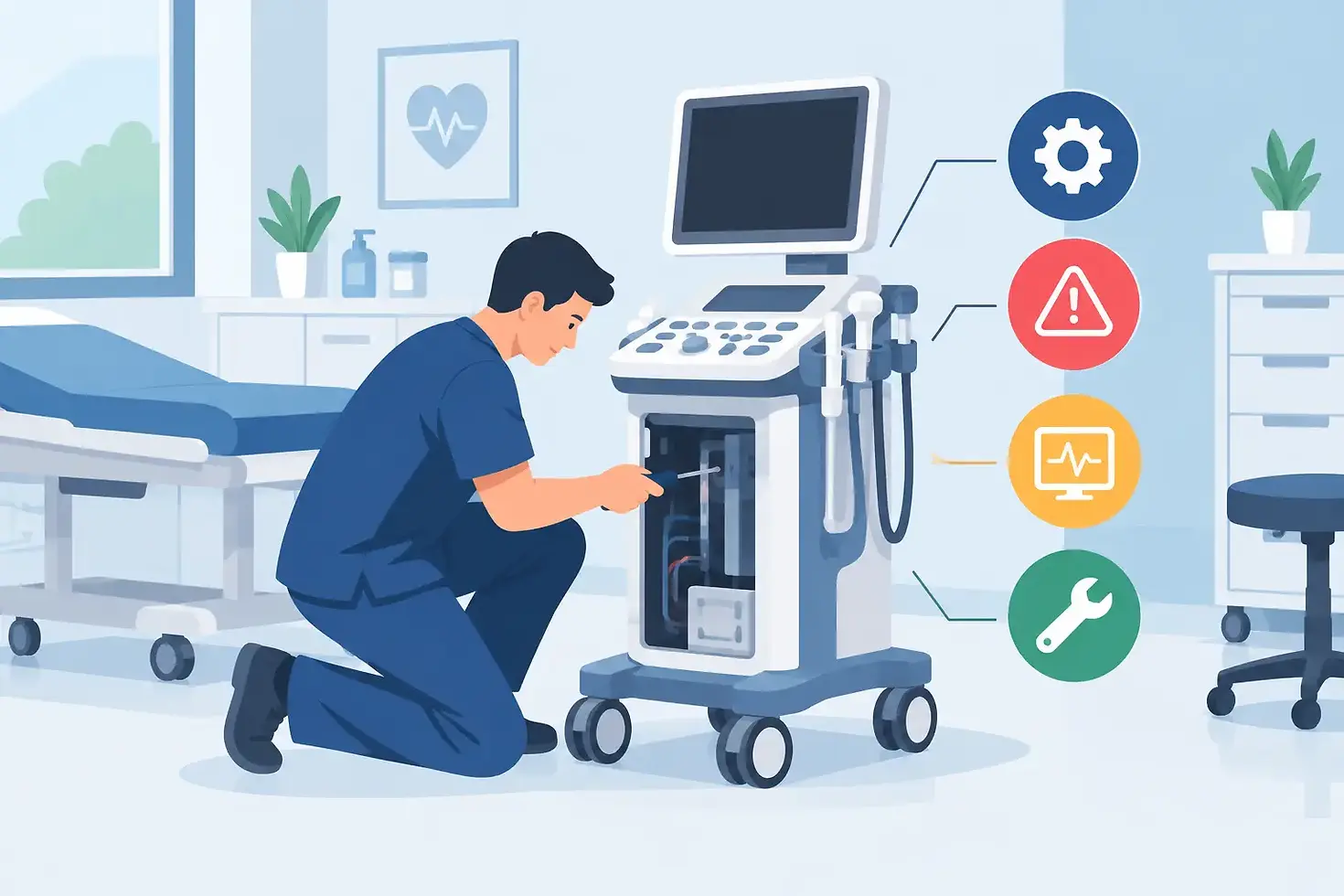
Top Signs Equipment Needs Service in Your Clinic

A sterilizer that suddenly runs longer, an electrosurgical unit that delivers inconsistent output, or a monitor that drifts from expected readings can turn a normal clinic schedule into a service problem fast. Knowing the top signs equipment needs service helps your team act before a minor performance issue becomes canceled appointments, compliance exposure, or an unexpected equipment replacement.
Clinical equipment rarely fails without warning. The challenge is that early warning signs can look like small inconveniences: a new noise, an intermittent error code, a cycle that needs to be repeated, or a result that seems slightly off. For healthcare facilities, those details deserve attention. A reliable maintenance response protects patient care, staff workflow, and the useful life of the equipment you depend on every day.
Top Signs Equipment Needs Service
1. Results are inconsistent or no longer repeatable
Inconsistent performance is one of the clearest reasons to schedule professional service. A device that works correctly one day and produces unreliable results the next should not be treated as a normal part of aging equipment.
For example, a sterilizer may complete a cycle but show changing temperature, pressure, or timing behavior between loads. A diagnostic device may provide readings that do not align with known controls or patient expectations. An electrosurgical unit may seem to have uneven output, require unexpected setting adjustments, or perform differently with the same accessory setup.
The cause may be calibration drift, a worn component, a failing sensor, a connection issue, or an internal control problem. The exact cause depends on the equipment and its use history, but the operational response is similar: document what happened, remove the unit from patient use if performance or safety is in question, and arrange an evaluation. Repeating a questionable process until it appears normal can create a larger problem than the original fault.
2. Error messages, alarms, or warning indicators keep returning
A single alert does not always mean the equipment needs a major repair. Some notifications point to a user-correctable issue, such as a door not fully latched, a depleted consumable, or an accessory that is not properly connected. But an alert that returns after the specified corrective action is a service signal.
Do not rely on clearing an error code as proof that the underlying issue is resolved. Repeated codes can indicate deteriorating seals, faulty switches, sensor failures, electrical concerns, or control-board issues. This is especially true when the warning appears during a critical function, such as a sterilization cycle, output delivery, charging sequence, or self-test.
Keep a simple record of the message, date, operating conditions, and any steps taken by staff. That information can shorten diagnosis and help a certified technician determine whether the issue is isolated or part of a recurring pattern.
3. The equipment is making new noises or behaving differently
Operators know what their equipment normally sounds and feels like. New grinding, rattling, clicking, buzzing, vibration, or unusual fan noise should not be ignored simply because the unit is still operating.
Mechanical changes can point to wear in pumps, motors, bearings, fans, hinges, valves, or internal mounting hardware. Electrical components may also create unusual sounds when they begin to fail. In autoclaves and other sterilization equipment, a change in filling, venting, draining, or door operation may signal a maintenance issue before the unit stops functioning altogether.
Physical changes matter as well. Watch for doors that no longer close smoothly, controls that stick, loose connectors, cracked housings, frayed cords, fluid leaks, unusual odors, or excess heat. Equipment should be taken out of service promptly when there is a potential electrical, thermal, fluid, or patient-safety concern. A quick visual inspection at the start of the day gives staff an opportunity to catch these problems early.
4. Sterilization cycles fail, change, or require repeat processing
For dental offices, medical practices, and outpatient facilities, sterilization equipment demands close attention. A failed cycle is not just an operational delay. It may affect instrument availability, scheduling, infection-control processes, and documentation requirements.
Service is warranted when cycles abort, take longer than normal, fail to reach expected parameters, leave unexpected moisture, show leakage, or produce repeated indicator concerns. A door gasket, heating component, valve, sensor, drain path, water-quality issue, or control malfunction may be involved. Staff should follow the manufacturer’s instructions and facility protocols rather than attempting to compensate for a recurring failure through repeated cycles or unofficial adjustments.
It also helps to distinguish between a one-time loading issue and a machine-performance issue. An overloaded chamber or improper packaging can affect a cycle. However, if the same issue continues after proper loading and documented operating procedures are followed, the equipment needs a qualified inspection.
5. Calibration is overdue or readings have begun to drift
Not every equipment problem is visible. Calibration-dependent devices can appear to operate normally while delivering readings or output that no longer meet required tolerances. That creates risk for clinical decisions, procedure quality, and compliance documentation.
Review calibration labels, service records, manufacturer intervals, and any facility-specific requirements. If a device is past due, schedule calibration rather than waiting for a performance complaint. If the device has been dropped, moved, exposed to unusual conditions, repaired, or has shown questionable readings, an earlier calibration check may be appropriate.
Calibration is not the same as a quick functional check. A unit may power on and pass a basic user test while still requiring verification against appropriate standards. The right interval depends on the device type, frequency of use, manufacturer guidance, and your organization’s quality program. High-use equipment generally benefits from a more disciplined service schedule than equipment used occasionally.
6. Downtime is becoming a pattern
One repair event can be expected over the life of almost any device. Multiple interruptions, recurring part replacements, or repeated calls for the same symptom indicate that the equipment needs a broader assessment.
At that point, the decision is not always “repair or replace” in the abstract. Consider the age of the unit, availability of replacement parts, repair history, expected turnaround, loaner or backup options, and the cost of disruption to your practice. A repair may be the practical choice when the issue is isolated and the equipment remains supportable. Replacement may make more sense when failures are recurring, parts are obsolete, or the device can no longer reliably support your workflow.
A qualified service provider can help clarify the condition of the equipment and identify whether preventive maintenance, a specific repair, recalibration, or replacement is the most cost-effective next step.
Why Preventive Maintenance Matters Before a Failure
Preventive maintenance is often easier to schedule, less disruptive, and more affordable than emergency repair. It gives technicians the opportunity to inspect wear items, clean critical areas, test operating functions, verify safety features, and replace components that are nearing the end of their service life.
For sterilizers, that may include inspection of seals, filters, valves, heating functions, sensors, and drain-related components. For electrosurgical equipment, service may involve checking connections, controls, output performance, cords, accessories, and safety-related functions. The exact scope should follow the manufacturer’s recommendations and the equipment’s clinical use.
Preventive service also creates better records. Clear maintenance and calibration documentation supports internal accountability and gives your facility a reliable history when troubleshooting future issues. It can help identify whether a recurring failure is tied to a particular component, operating condition, or maintenance gap.
What to Do When You Notice a Service Warning Sign
Start by protecting patients and staff. If the issue involves inaccurate performance, failed sterilization, electrical damage, overheating, fluid leakage, or any safety concern, remove the equipment from clinical use according to your facility procedures. Do not bypass alarms, defeat safety features, or use improvised parts as a long-term fix.
Next, document the symptom in practical terms: what the device did, when it occurred, whether it is intermittent, any displayed code, and what accessories or supplies were in use. Include the model and serial number when available. This avoids delays when requesting service or sourcing compatible replacement parts.
Then schedule the appropriate level of support. Some concerns require troubleshooting and repair; others call for preventive maintenance or calibration. IMEDTECH supports healthcare providers with fast, reliable, and affordable equipment service, replacement parts, and maintenance solutions designed to reduce unnecessary downtime.
Equipment service works best when it is planned before the schedule is under pressure. Treat unusual performance as useful information, act on recurring warning signs, and keep service records current so your clinic can stay focused on patient care.


Comments