

When to Call an Autoclave Repair Service

A sterilizer that will not complete a cycle is not a minor equipment issue. It can delay procedures, interrupt instrument turnaround, and create uncertainty around whether a practice can maintain its normal schedule. A responsive autoclave repair service helps dental offices, medical practices, and outpatient facilities identify the source of the failure, restore reliable operation, and reduce avoidable downtime.
For facilities that depend on daily sterilization, the right response is not always to replace the unit. Many autoclave problems involve serviceable components, maintenance gaps, water-quality issues, or calibration needs. The practical decision depends on the machine’s condition, repair history, age, availability of parts, and the cost of lost productivity while it remains out of service.
What an Autoclave Problem Can Cost a Practice
An autoclave is central to the clinical workflow, but its impact is often most visible when it stops working. If loads cannot be processed on time, staff may need to change appointment flow, use backup inventory, postpone procedures, or arrange alternate sterilization capacity. Even a unit that appears to run can create a larger concern if it fails to reach the required cycle conditions or produces inconsistent results.
The cost is more than the repair invoice. A practice may lose staff time to repeated troubleshooting, rush replacement instruments, or rely on a backup unit beyond its normal workload. That is why early service is generally more cost-effective than waiting for a small leak, error message, or slow cycle to become a complete shutdown.
Reliable service also supports a disciplined maintenance process. Repair documentation, performance checks, and scheduled preventive care give office managers and biomedical teams a clearer record of the equipment’s condition. This is especially useful when planning budgets, evaluating replacement timing, or managing multiple sterilizers across a facility.
Signs You Need Autoclave Repair Service
Some failures are obvious. The unit will not power on, will not heat, will not build pressure, or stops before the cycle is complete. Other signs are easier to dismiss but deserve prompt attention because they may point to developing mechanical or control issues.
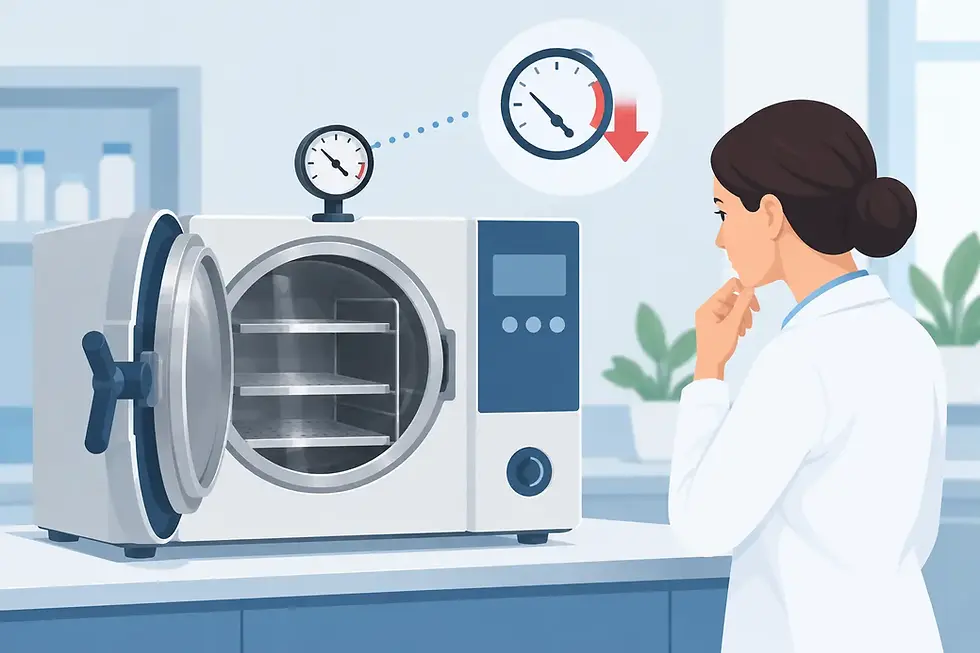
Watch for longer-than-normal cycle times, water or steam leaks, repeated low-water warnings, unusual noise, inconsistent drying, door or gasket problems, or recurring error codes. A chamber that does not reach the expected temperature or pressure should be removed from normal use until the problem is evaluated. Do not assume that restarting the machine has corrected a recurring fault.
Poor water quality can also create symptoms that look like a major equipment failure. Mineral deposits can affect valves, reservoirs, sensors, and internal plumbing. Using the water type specified by the manufacturer and following recommended cleaning procedures can prevent unnecessary wear. However, visible buildup or repeat warnings may still require technical inspection to determine whether components have already been affected.
When a Failed Cycle Requires Immediate Action
If a cycle does not complete as intended, treat the load according to your facility’s sterilization procedures and manufacturer guidance. Do not release instruments simply because the cycle began or because the display returned to normal afterward. Keep clear records of the event, including the cycle information, any error codes, and the conditions observed by staff.
This information helps a qualified technician diagnose the issue more efficiently. It also helps the practice distinguish between an isolated operational error and a pattern that requires repair, calibration, or replacement parts.
What a Qualified Service Visit Should Address
A proper autoclave repair visit goes beyond clearing an error code. The technician should evaluate the reported symptom, inspect the equipment condition, and verify whether the sterilizer performs correctly after repair. Depending on the model and fault, this can involve checking heating systems, pressure and temperature controls, sensors, valves, gaskets, door mechanisms, drainage paths, reservoirs, electrical connections, and control-board functions.
The exact scope depends on the autoclave. A leaking door may call for a gasket inspection and alignment check. Failure to heat can involve the heating element, wiring, safety devices, or control system. A slow exhaust or poor drying result may be tied to a valve issue, blocked pathway, worn components, or an underlying maintenance concern. Replacing a part without confirming the cause can lead to repeat service calls.
Testing matters after the repair. The goal is not merely to make the unit turn on. It is to confirm that it can complete its intended cycle consistently. A service provider should communicate what was found, what was repaired, whether additional maintenance is recommended, and whether there are signs the unit is approaching a higher-cost failure.
Repair, Preventive Maintenance, or Replacement?
Not every service call has the same answer. A relatively new unit with a worn gasket, failed valve, or sensor issue is often a strong repair candidate. A well-maintained autoclave can provide years of value when parts remain available and the repair restores dependable performance.
Preventive maintenance is the right choice when the unit is working but showing normal wear. Scheduled inspections and replacement of wear items can reduce unexpected shutdowns, particularly in high-volume dental and clinical settings. Maintenance also gives staff a chance to address chamber cleanliness, water system condition, filters, seals, and other items before they affect daily operations.
Replacement becomes more reasonable when repair costs are rising, failures are frequent, parts are no longer readily available, or the sterilizer no longer fits the practice’s volume and workflow. The least expensive repair is not always the best operational decision if the unit continues to cause disruptions. Conversely, replacing a repairable unit too early can strain capital budgets without improving the underlying maintenance process.
A knowledgeable service partner can help assess that trade-off based on condition, repair history, parts availability, and the practice’s need for backup capacity.
How to Reduce Future Sterilizer Downtime
Autoclave reliability is partly a service issue and partly an operating discipline. Staff should follow the manufacturer’s instructions for loading, water use, routine cleaning, and cycle selection. Overloading, poor packaging practices, incorrect water, and skipped cleaning can all contribute to performance issues or premature component wear.
Facilities should also avoid waiting until the equipment fails completely before scheduling support. Keep a simple service history that records maintenance dates, parts replaced, recurring alerts, and performance concerns. If a particular error code or symptom returns, report that pattern when requesting service rather than treating each incident as unrelated.
For practices with heavy procedure volume, backup planning is equally important. That may mean maintaining a second sterilizer, coordinating capacity across locations, or setting clear protocols for equipment failures. The right setup depends on the number of instruments processed each day and how much interruption the practice can absorb.
Choosing an Autoclave Repair Service Partner
Speed matters when a sterilizer is down, but technical capability matters just as much. Look for a provider that understands medical and dental equipment workflows, can source appropriate replacement parts, and can explain the repair in practical terms. Clear communication about estimated turnaround, repair options, and preventive recommendations helps facilities make decisions without unnecessary delays.
A full-service equipment partner can be particularly useful when repair is only one part of the need. A practice may require replacement parts, preventive maintenance supplies, calibration support, or a replacement unit if repair is no longer the sound option. IMEDTECH supports this practical approach by combining certified technical service with access to equipment and maintenance resources.
When an autoclave begins showing warning signs, schedule service before the problem reshapes your day. Fast evaluation, informed repair decisions, and consistent maintenance help protect the sterilization workflow your patients and staff rely on.


Comments