

Equipment Service Contracts That Protect Uptime

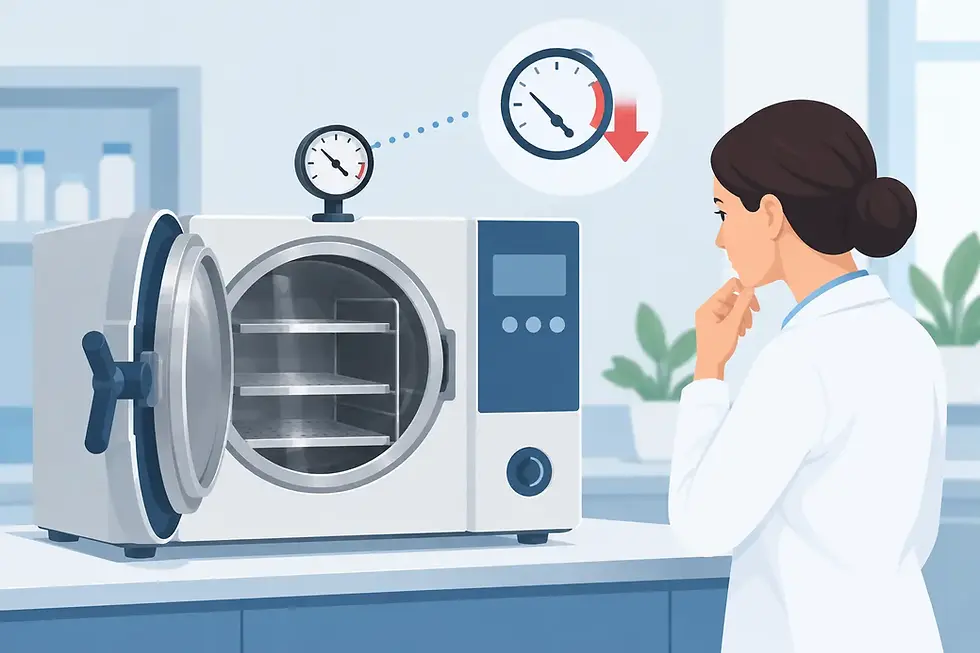
A failed autoclave before a full day of procedures, an electrosurgical unit that will not power on, or overdue calibration can disrupt far more than a schedule. It can delay patient care, create staff stress, and force a practice to make an expensive last-minute repair decision. Equipment service contracts give healthcare facilities a more controlled way to manage those risks. Instead of reacting to every breakdown, practices can plan maintenance, receive faster technical support, and build a clearer picture of their equipment costs.
For dental offices, private practices, outpatient clinics, and ambulatory care providers, the right agreement is not simply a repair plan. It is an operational tool. The value depends on the equipment covered, the provider's response capabilities, and how well the contract matches the facility's actual workload and risk tolerance.
What Equipment Service Contracts Should Cover
Equipment service contracts are agreements that define how a service provider will inspect, maintain, repair, calibrate, or support specified devices over a stated term. Some are comprehensive and include scheduled preventive maintenance, labor, travel, and selected replacement parts. Others are narrower, covering only annual inspections or offering discounted repair rates when service is needed.
The difference matters. A contract that sounds economical can still leave a practice exposed if it excludes the parts most likely to fail, limits emergency response, or does not address the equipment that is most critical to daily operations. A well-built agreement starts with a current asset list: manufacturer, model, serial number, age, location, service history, and current condition.
For example, a sterilizer may need routine inspection of door gaskets, valves, heating components, safety systems, and chamber performance. An electrosurgical unit may require functional testing, inspection of cords and accessories, and verification that the device is operating as intended. The exact service requirements should follow the manufacturer's recommendations, the device's use level, and the facility's policies.
Calibration deserves similar attention. Not every device requires the same calibration interval, and a service contract should clearly identify which instruments are included, what standards or procedures are used, and what documentation the facility will receive. Proper records can support internal quality processes, accreditation preparation, and informed equipment planning. They do not replace the facility's broader compliance responsibilities, but they make maintenance history easier to verify.
The details that prevent surprises
Before signing, review the scope of work in practical terms. The agreement should state whether preventive maintenance visits are scheduled in advance, what happens if a problem is found during an inspection, and whether corrective repairs are included. It should also explain how the provider documents completed work, calibration results, parts used, and recommendations for follow-up.
Look closely at response expectations. A provider may promise priority service, but priority can mean different things. Ask whether it refers to a callback, remote troubleshooting, an on-site visit, or completed repair. For a high-use sterilizer or a device with no backup unit, a faster on-site response may be worth more than a lower annual price.
Parts coverage is another common point of confusion. Consumables, cosmetic components, accessories, damage caused by misuse, and upgrades are often excluded. That can be reasonable, provided the exclusions are clear. Facilities should also ask whether replacement parts are new, refurbished, or manufacturer-equivalent, and whether the installed part carries its own warranty.
A useful contract typically spells out these operational items:
Covered equipment, including model and serial number
Preventive maintenance and calibration tasks, intervals, and documentation
Labor, travel, parts, shipping, and loaner equipment terms
Service response targets and the process for urgent equipment failures
Exclusions, renewal terms, cancellation conditions, and warranty coverage
When a Contract Makes Financial Sense
A service contract is most useful when downtime is costly, repair needs are somewhat predictable, or an office has limited internal biomedical support. The calculation is not limited to the price of a technician visit. Consider canceled or rescheduled appointments, staff time spent troubleshooting, expedited shipping, rental equipment, and the pressure of sourcing a replacement when a device fails unexpectedly.
Facilities with older equipment can benefit from structured inspections, but there is a trade-off. A comprehensive plan for an aging device may become expensive if parts are hard to source or if the unit is approaching replacement. In that case, a preventive maintenance agreement with discounted corrective repair may be a better fit than full parts-and-labor coverage. The service provider should be able to discuss that decision candidly rather than treating every device the same.
Newer equipment may be protected by a manufacturer warranty, making overlapping coverage unnecessary. Still, a practice may want a service partner for maintenance coordination, calibration, non-warranty items, or equipment from multiple manufacturers. Consolidating those needs can reduce administrative work and prevent service records from being scattered across vendors.
The strongest case for a contract often involves critical equipment with no practical backup. If a dental practice has one sterilizer serving a busy schedule, preventive maintenance and priority repair support can protect continuity. If a clinic owns several comparable devices and can continue operating when one is down, it may choose a more limited plan and reserve funds for repairs as needed.
Questions to Ask Before You Sign
Start with the provider's technical capabilities. Ask whether technicians are trained or certified for the equipment in question and whether they regularly service the specific manufacturer and model. General repair experience is valuable, but specialized equipment requires familiarity with common failure points, appropriate testing procedures, and compatible replacement parts.
Next, ask how the provider handles a device that cannot be repaired during the first visit. Will parts be stocked, shipped quickly, or ordered after diagnosis? Is depot repair available? Can the provider offer a loaner or help identify a replacement option if the repair is not economical? These questions are especially relevant for sterilization equipment and other devices that directly affect a practice's ability to keep appointments.
Review the reporting process as well. After each visit, the facility should receive a clear service record showing the date, device identification, work performed, test results where applicable, parts installed, and any recommended next steps. Good documentation helps office managers plan budgets, identify recurring issues, and decide when repair costs no longer justify extending a device's life.
It is also reasonable to ask about pricing outside the agreement. Even comprehensive plans have boundaries. Understand the hourly rate for excluded work, markup or pricing approach for non-covered parts, travel fees, and after-hours options. A contract should make costs more predictable, not create new uncertainty when an urgent repair occurs.
Building a Service Plan Around Your Facility
The most effective approach is to tier equipment by operational impact. Identify devices that stop patient care when unavailable, equipment that has a backup, and lower-risk assets that can be repaired on a standard schedule. Then match coverage levels to those categories instead of purchasing the same plan for every item.
Create a maintenance calendar that accounts for patient volume and avoids peak clinic hours where possible. Keep service records in one accessible location, and make sure staff know how to report equipment issues promptly. Small changes in performance, unusual noises, error codes, leaks, damaged cords, or inconsistent cycle results should be reported before they become complete failures.
A full-service partner can simplify this process by combining equipment supply, replacement parts, preventive maintenance, calibration, and repair coordination. IMEDTECH supports healthcare facilities with practical service options designed to keep critical clinical equipment available without forcing staff to manage multiple vendors for every need.
The best agreement is not necessarily the one with the broadest coverage. It is the one that gives your facility a realistic maintenance schedule, clear service expectations, and dependable help when a critical device cannot wait. Start with the equipment that your patients and staff rely on most, then build coverage that protects the work your practice needs to do every day.


Comments